28 Sep 2026
Tracing Regulatory Milestones and Influential Figures in Hybrid Betting Platform Growth

Hybrid betting platforms that combine sports wagering with casino-style games have expanded under a series of regulatory shifts that began in the late twentieth century, and observers trace the earliest frameworks to jurisdictions such as Antigua and Barbuda which passed the Free Trade and Processing Act in 1994 to license online operators that later offered mixed product suites. Those early licenses focused on tax revenue and consumer protection standards, while data from industry reports shows that by 2000 several Caribbean and European territories had followed with similar statutes that allowed operators to bundle live event betting alongside table games and slots on single interfaces.
Foundational Legal Developments in the 2000s
European Union member states advanced the conversation when Malta introduced its Remote Gaming Regulations in 2004, creating a licensing regime that recognized hybrid offerings and required operators to maintain separate ledgers for sports and casino segments, and researchers note that this structure influenced later rules in the Isle of Man and Alderney where similar product combinations gained approval. In North America, the United States Unlawful Internet Gambling Enforcement Act of 2006 restricted financial transactions yet left room for intrastate developments, prompting states such as Nevada to update its regulations in 2011 to permit mobile sportsbooks that eventually incorporated casino content once additional statutes cleared the path.
Expansion Through State and Provincial Reforms
Canadian provinces moved forward when British Columbia and Ontario updated gaming control acts between 2015 and 2022, allowing licensed platforms to merge sports betting markets with digital casino libraries under unified player accounts, and figures from regulatory filings indicate that these changes coincided with a rise in reported gross gaming revenue that exceeded previous single-product forecasts. Australian authorities contributed through the Interactive Gambling Amendment Act updates that took effect in 2017, which clarified rules around in-play betting while maintaining prohibitions on certain casino features, yet several operators adapted by offering compliant hybrid menus that complied with state-level variations across New South Wales and Victoria.
Profiles of Key Regulatory Architects and Industry Pioneers
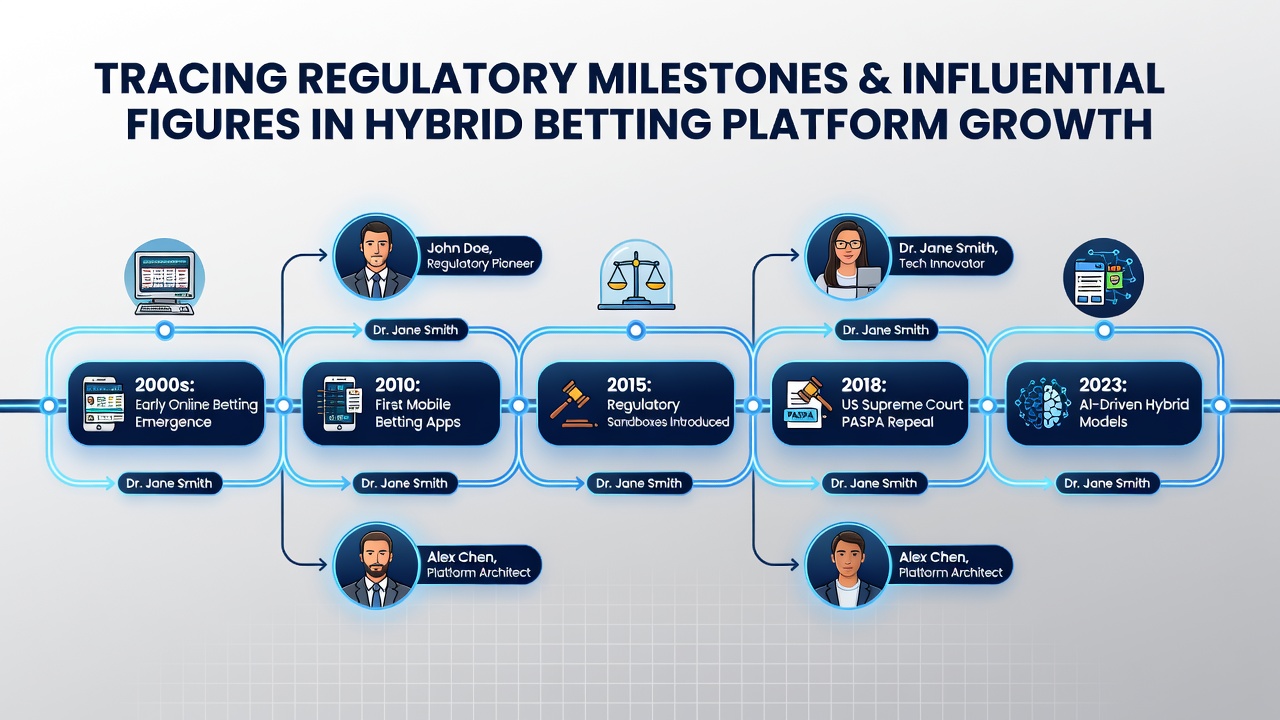
Observers credit individuals such as former Malta Gaming Authority chair Joseph Cuschieri with shaping early compliance templates that addressed both sports integrity and casino fairness testing, while in the United States figures including New Jersey Division of Gaming Enforcement director David Rebuck oversaw the rollout of internet gaming rules that explicitly permitted hybrid site architectures after the 2018 Supreme Court decision on sports betting. Academic analyses from institutions including the University of Nevada, Las Vegas highlight how these administrators coordinated with operators to implement geofencing and age-verification protocols that became standard across mixed-platform environments, and data from the American Gaming Association shows that states adopting similar frameworks reported consistent year-over-year increases in licensed operator numbers through 2025.
Further contributions emerged from regulatory bodies in additional regions, including the Kahnawake Gaming Commission which refined its licensing conditions in successive revisions to accommodate bundled products, and researchers at the University of Sydney documented parallel developments in Asia-Pacific markets where local authorities adjusted rules to capture revenue from hybrid offerings without expanding into previously restricted categories. In September 2026 several European and North American jurisdictions are scheduled to implement updated technical standards that require real-time reporting of both sports and casino activity within single platforms, a step that builds directly on the foundational statutes established decades earlier.
Recent Technical and Oversight Integrations
Industry organizations such as the European Gaming and Betting Association have published position papers that track how data-sharing requirements between sports leagues and casino auditors evolved after 2020, and those documents indicate that hybrid platforms now routinely integrate third-party monitoring tools to satisfy multiple regulators simultaneously. Government agencies in Pennsylvania and Michigan, for example, introduced joint sports and iGaming reporting portals that reduce administrative duplication for operators holding dual licenses, and case studies compiled by the association demonstrate measurable reductions in compliance costs once these unified systems became operational.
Conclusion
The progression of hybrid betting platform regulation reflects coordinated actions across multiple continents, with milestones spanning from Caribbean licensing experiments in the 1990s to scheduled 2026 technical updates that continue to refine oversight of combined sports and casino environments, while influential figures in regulatory agencies and industry associations have supplied the administrative continuity necessary for these frameworks to adapt alongside technological capabilities.